Top 10 Mantras for strong immunity in 2022: part -1

As the new Covid-19 strain Omicron is spreading fast across the country, everyone need to keep natural immunity high. It is time to prepare our bodies to fight the virus.  In order to do that we must improve the efficacy of the body’s immune system (defense system) against the virus.

Let us understand immune system in short

The immune system (soldiers of our body) includes the organs and processes of the body that provide resistance to infection and toxins. Immune system is broken down into innate immunity and adaptive immunity.

Innate immunity is something already present in the body.

Adaptive immunity is created in response to exposure to a foreign substance.

T cells are one of the important white blood cells of the immune system and play a central role in the adaptive immune response. T-cells of our immune system play a prominent role in targeting and destroying virus-infected cells (Killer cells) and provide us protection. Their role in combating new strains of Covid-19 has been found to be more effective.

Let us look at the most powerful mantras to boost immunity in simple way.

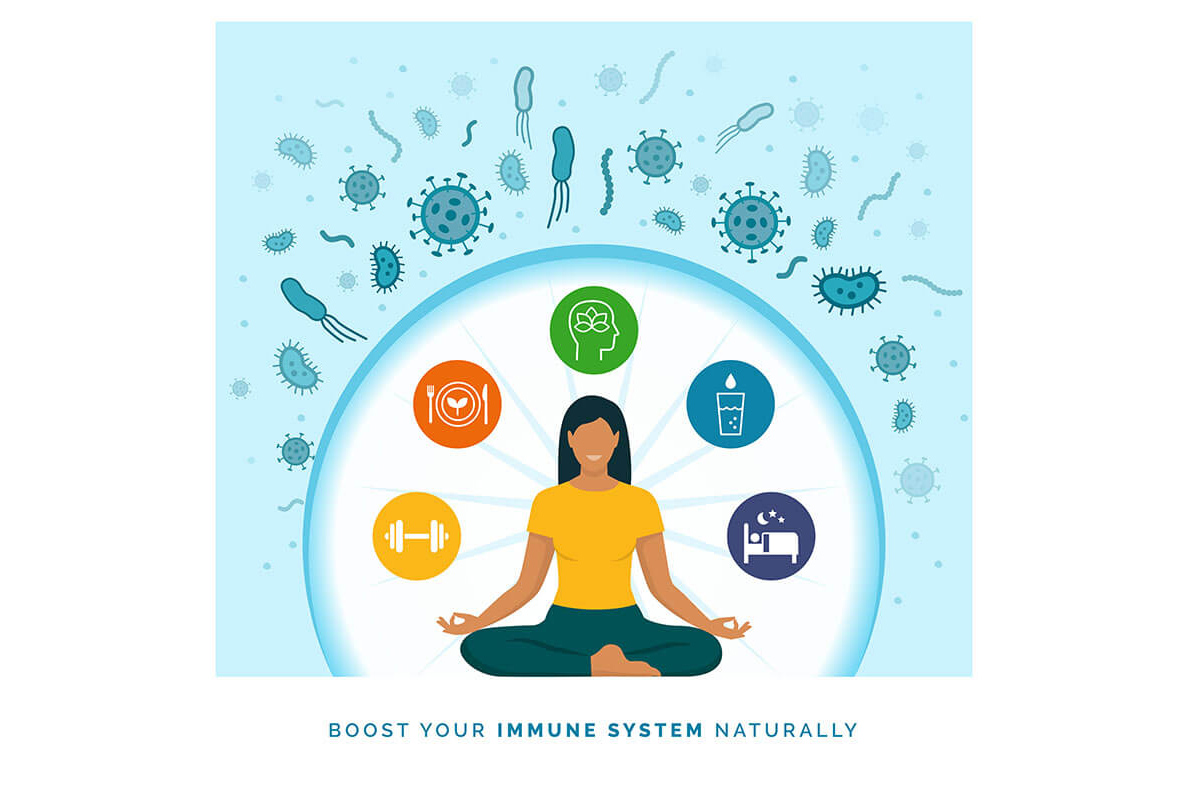
  1. Deep sleep

Sleep deprivation lowers immune response, increases inflammation and literally invites infections, viruses etc. One should not underestimate the power of a good night’s sleep as it restores and  rejuvenates the body and mind like nothing else.  

Quick tip –

Eat a light dinner, set a sleep schedule, reduce light and noise in the bedroom to promote sleep hormones.

2. Home cooked food – ghar ka khana

Having home cooked food with fresh ingredients is essential to preserve nutrients in food. Freshly cooked HOME food helps body to nourish. Avoiding ready to eat food, outside food reduces oxidative stress to a huge extent (toxins, additives, preservatives) and helps spare antioxidants, nutrients to strengthen immunity.

Quick tip –

Simple home cooked food with balance of proteins, carbs, fats and micro- nutrients work the best to improve immune response.  Include more garlic, ginger, Indian spices- cinnamon, cloves, cardamom, turmeric, cumin, carom seeds, raw honey, tulsi, crucifers, colored bell pepper, amla.

3. Nourish -the body

Winter is the season to nourish and build up energy stores in the body.  This is the time to boost agni (in Sanskrit)- stomach acids and metabolism. So rather than spending huge amount of money on supplements it is the best practice to nourish the body through natural superfoods. 

Quick tip –

Eat winter delights like sugarcane, custard apple, apples, ber- berries, nuts, tamarind, amla and til (sesame seeds), gul (organic jaggery), ghee – clarified butter, fresh harvest of veggies to keep immunity high and digestive system strong.

4. Improve gut health   

Gut is the receiving site for all nutrients, supplements and water. Thus, healthy gut and balancing the gut microbiome is important to improve nutrients absorption and in turn strengthen the immunity. 

Quick tip –

Eating probiotic foods such as yoghurt, sour pickles, and traditional buttermilk, ginger and garlic are beneficial in improving gut health.

5. Stay active

Exercising in moderation, moving around and staying active are simple yet very effective ways to keep the immunity high. Exercise promotes blood circulation, oxygenation and this makes the immune system more efficient. 

Quick tip –

Include cardiovascular exercises such as walk, jog, run, swim, and cycle 45-60 minutes, five days a week.

6. Deep breathing

Deep breathing exercises have many benefits as they help calm down the body, reduce anxiety, improve blood circulation, provide more oxygen to the cells and make the body healthier over a period of time. As deep breathing strengthens lung cells and blood flow it automatically helps fight against infections like Covid and helps immunity.

Quick tip-

15-20 long deep breaths or breath holds work wonderfully to recharge lung cells and improve oxygen carrying capacity of blood – saturation level.

7. Increase happy hormones-connect with inner self

Any kind of physical, psychological, emotional stress, injury, trauma, infection puts pressure on the immune system. Thus, staying calm and de stressing the body and  mind can do wonders to immunity. The best way to offer rest to immunity is doing some basic pranayama exercises, yoga, meditation, deep breathing, listening to soothing music and spending time with dear ones. It works wonders to rejuvenate the mind and all cells of the body – makes more happy hormones like Dopamine!

Quick tips –

Practice ‘mindfulness.’ Connect with your inner -self – I recommend doing me time activity 1 hour every weekend. (perusing hobbies like coloring, drawing, painting, long drive, dancing, music, being in nature or deep sleep, etc )

8. Reduce stress hormones -Cortisol

It is equally important to reduce stress hormones while we work on improving happy hormones in the body.  Cortisol being the most important one. Staying away from high pressure environment, trying to take short work breaks help reduce cortisol secretion in the system which in turn prevents pressurizing immune system.

Quick tip –

Very effective way to do this is to increase SCREEN FREE time as much as possible.

9. Daily detox

As we clean our body externally on a day to day basis, it is equally important to clean it internally. That’s the daily detox – to flush out toxins, heavy metals from systems daily! Hydration, mind health and right food choices are the key factors To help detox pathways work well. Ensure that you are well hydrated and eat foods promoting detoxification throughout the day.

Quick tip

Including some herbs like lemongrass, mint, lemon balm, cats claw, milk thistle, turmeric, ashwagandha, green tea and berries along with good fluid intake improves the cleansing process.

10. Change in life style

It is important to modify lifestyle to reverse lifestyle diseases so that the body is not already burdened with diseases. Manage the side effects of medications to keep your immune system – soldiers of the body strong. 

  • Avoid tobacco in any form, especially smoking.
  • Avoid alcohol.
  • Avoid or reduce drinks and foods high in caffeine such as dark chocolate, coffee, energy drinks, sodas.
  • Maintain a healthy weight (BMI: 18.5 to 24).
  • Include immune-supporting micronutrients like Zinc, vitamin C, B complex vitamin, vitamin D. These are vital for immune function, prevention and recovery from infections. I highly recommend  to get the levels checked and take necessary guidance from experts.

These tips must have guided you toward strengthening your immunity. Take care of your immune system and it will take care of you.

Do let us know in comments, if want to know more about strengthening immunity.
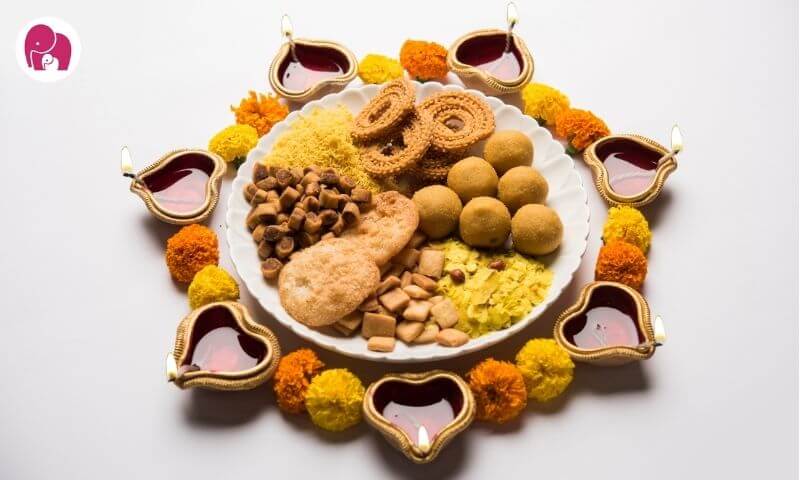
10 Powerful, tried and tested ways for guilt free Diwali

The most awaited festival of the year, Diwali is knocking on the doors! It is the time to get together with dear ones and enjoy traditional sweets, desserts! Diwali celebrations and sweet treats are  synonymous, right?

Diwali is rooted in ancient traditions of wellness. It is celebrated during Sharad Ritu (autumn season), between mid-September and mid-November. This season marks the end of the wet, rainy season and is a sunny and dry interlude before winter sets in. 

Traditional practices followed in Diwali  are traditional wake up before dawn, applying heated sesame oil on the head and body (along with ubtan powder in some parts of India), having a hot water bath, and wearing new clothes. A mix of Diwali recipes like laddoos, Mysore pak, sev, boondi, chakli, murukku, chivda and so on are eaten early in the day. 

The basic ingredients used in these recipes include rice, lentils, chickpea flour, coconut, jaggery, nuts, seeds, ghee. All of these help control dryness of the body which is caused by the changing weather. These ingredients also balance increased pitta- acidity  and increased hunger during this weather. 

Over a period of time these traditions have changed and is the major reason behind calorie overload and piling extra kilos. While we  indulge in lots of desserts, lip-smacking dishes and chocolates there is guilt  in our mind which keeps warning us about health. 

But let’s have a guilt-free Diwali this year to enjoy delicious foods without ruining the health and diet program by understanding the basics and science behind Diwali.

 My personal suggestion to you is 

ENJOY ALL DIWALI DELICACIES THIS DIWALI!!

 Yesss! Eating is the only way to give a treat to yourself and express an unbroken chain of love, wisdom, togetherness with dear ones! If you try to refrain or avoid eating these sweets, it is only going to build up stress!! And making weight loss even difficult.

Here are my tried and tested tips to enjoy a guilt free Diwali!

  1. Opt Homemade Sweets

Home made sweets with ghee, fresh ingredients truly serve the purpose of nourishing your body. Store bought products have many additives, preservatives, refined oils and extra sugar which harm the body rather than nourishing.

  1. Have heavy wholesome breakfast

This will help you to be energetic throughout the day and keep up the BMR. Because of heavy breakfast you tend to skip mid meals – snacks or eat less at major meals – lunch. This easily  avoids excessive calorie intake.

3. Drink plenty of water

Keep hydrating yourself. Make sure you drink 10-12 glasses of water to ensure better digestion, manage hunger and avoid overeating. You can include lemon water, fresh buttermilk, tender coconut water, herbal tea!

4. Mind your portion size / quantity of food

There is no harm in having Diwali sweets if you keep your serving size under control and do not have a second serving. For eg: Enjoy a ladoo (small size), but don’t binge eat. 

5. Eat mindfully – eat slowly

Along with portion size it is important to eat mindfully. Make sure you chew food properly by keeping your spoon down after every bite. When you eat slowly you tend to eat less. 

You will be able to pretend that you are eating more than others despite being diet conscious. Woohoo!!

6. Be Active – movement 

It is so important to be active throughout the day. The activities like chores, stairs, helping others, active participation in Diwali preparation (activities which we do throughout the day) are really good for our overall health, metabolism and also contribute to calorie burning.

7. Don’t forget fruits and vegetables

Fresh fruits and vegetables are a powerhouse of essential vitamins and minerals without adding too many calories. The fiber present in them aids digestion, maintains gut microflora. So make sure you have at least 2 fresh WHOLE fruits everyday.

8. Stretch yourself

Continue your exercise regimen. Workout though it is a holiday period. Don’t be LAZY. Get ready and push yourself to exercise for a minimum 45 min everyday.

This will help detoxification, improve blood circulation, good calorie expenditure and strengthen muscles which keeps the body toned.

9. Cut down on chai – tea coffee

Avoid excess cups of tea and coffee just because it is the festive season or holidays. Infact replace chai or coffee with herbal teas like cinnamon, peppermint, rosehip, lavender, lemongrass. BELIEVE me your body can not thank you enough for this real treat!

10. Avoid stress and enjoy the festival to the fullest!

Understand the tradition and reason behind each ritual of this wonderful festival and enjoy it to the fullest in TRUE SENSE. This will make each cell of your body rejuvenated and in fact help your healing Journey!

So,

Make Diwali this year a happy, healthy, healing and rejuvenating Diwali!!!

May it bring all health, prosperity and well being in your life.

About author

Swatee is a highly qualified nutritionist, Registered Dietician, functional nutrition practitioner, entrepreneur with 14 yrs of experience in the field of nutrition with a mission to guide 100000 people live a medicine free life with help of simple, sustainable nutrition – as power medicine!

How to avoid 10 Common Mistakes Made While Losing Weight

Are you trying to lose weight? And are you trying your best and still not getting any weight loss?

If yes, the real reason behind this is some mistakes made knowingly or unknowingly. Sometimes you feel like you are doing everything right, still not getting any results. But the fact is you may actually be hindering your progress by following misguided advice or methods or practices.

Here are the most common mistakes with their powerful easy solutions to ease your weight loss journey.

1. Focusing on weighing scale ONLY

In 14 yrs of practice, I have noticed that people are obsessed about the number on the weighing scale.

But the fact is – Focus should be on healing and symptomatic improvements and not ONLY the number. Also, the constant number on the weighing scale could be indicative of reduced fat mass and increased muscle mass. 

An easy tip to follow here is keep a record of your measurements every day. A stable weight with decreasing measurements (inch loss) is an excellent indicator that the diet is working on you.

Second tip is to take monthly pictures of yourself! This will document your transformation journey and can reveal you’re actually losing fat, even if the scale number does not change much.

2. Eating Too Many or Too Few Calories

While trying to lose weight, one may feel that he is not eating many calories. But, most of us have a tendency to underestimate and underreport our food intake. There are many research studies which have proven this.

It may happen that one eats too many foods that are healthy but also high in calories. For eg: nuts, ghee, avocado, etc. 

A quick tip here is keep a watch on your portion size. Quantity matters even if the food is healthy!

On the other hand, eating too little could be counterproductive.

Studies on very low-calorie diets providing less than 1,000 calories per day show they can lead to muscle loss and significantly slow down metabolism and increase micronutrient deficiencies.

“Consuming too many calories can hinder weight loss by slowing down metabolism. On the other hand, too few calories can affect metabolism and muscle mass.

3. Eating “health foods”

Food industry is growing steadily in the 21st century. As a marketing gimmick many companies advertise their products as healthy and nutritious. But the fact is  they are packed with unhealthy ingredients like artificial sweeteners, additives, preservatives, excess salt and table sugar. For eg- packed fruit juices, energy bars, breakfast cereals. 

So if one consumes such “ healthy” food items he is actually eating too many calories ( refer point no 1) and making the weight loss journey harder.

4. Exercising and not dieting OR dieting and not exercising

Exercise and diet go hand in hand. For a healthy, sustainable weight loss, one must indulge in both, good exercises and healthy food. 

Dieting/ food protocol is required to get the appropriate calories and nutrition while exercise is required to effectively utilize those calories for fueling the body.

Working only one of the factors leads to an imbalance in metabolism and delays the healing process/ weight loss.

5. Crash diets

Crash diet is a type of diet where one intends to lose weight in a short timespan. Many people try this out to lose weight fast. But the fact is -such a diet is harmful to the body in many ways. It starves the body, weakens the immune system, micronutrient deficiencies and imbalance of metabolism. 

Once the crash diet is over people tend to gain weight quickly as they start eating a lot of food, so it is not effective, healthy and sustainable at all.

6. Skipping meals

To attempt weight loss, the most common mistake people make is skipping breakfast or dinner or skipping meals. It might seem logical to reduce calorie intake to lose weight faster. However, skipping meals not only slows down metabolism but also makes a person snack or overeat later in the day.

7. Not Eating Enough Protein

Eating enough protein is extremely important while trying to lose weight. Proteins have shown to help with weight loss in several ways. Good protein intake increases metabolic rate- improves calorie burning and protects muscle mass- protein sparing action during weight loss. 

A quick tip -To optimize weight loss, make sure each meal contains a good quality and quantity of protein foods.

8. Not Eating Enough Fiber

Not including enough fiber in the food regimen, slows down weight loss for sure and affects gut health as well.

Studies have shown that soluble fiber like pectins, gums ( eg: pear, apple, fenugreek seeds, chia seeds) helps reduce appetite – gives satiety. So it automatically reduces excess calorie intake.

Adding roughage – insoluble fiber to meals helps food move slowly through the digestive tract – delayed gastric emptying. This helps prevent frequent hunger.

Thus to ensure steady weight loss, include fiber rich foods in each major meal.

9. Having unrealistic expectations

Setting realistic, long-term goals for weight loss is a MUST. Having realistic expectations and understanding that weight loss is a gradual process will help you stay on track and not get discouraged. It takes time to shred those extra kilos which have accumulated over years together and achieve holistic health.

Realistic health goals are the foundation to have healthy and sustainable weight loss!

10. Consistency is the KEY

As mentioned above, it takes time to shred those extra kilos. Weight Loss or getting healthier is a gradual process. One must focus on consistency. Keep trying. Getting an accountability partner or guide helps a lot to achieve the health goals. 

If you are struggling with weight loss in spite of trying hard, try the tips suggested by me. I am sure you will start getting results. Work towards your health goals and be an inspiration to others. Let us ASPIRE- PERSPIRE-INSPIRE

If you really wish to start working on your health, get in touch with us. We work with functional nutrition where we work on the root cause and holistic approach.

Mind blowing Secrets in Foods We Eat Every Day

It is very important to take good care of our health in the current time of second – third wave of COVID19. We all wish for good health and immunity. That is why we keep searching the best available products, supplements, medicines. But you know what, our BEST HEALTH lives in our OWN KITCHEN. Here are some simple yet mind blowing secrets hiding in foods we eat every day which can keep the illnesses at bay.

  1. Lemon

Smelling or inhaling a lemon can help beat asthma, allergies, colds and difficulty of breathing. Studies have shown that  asthmatics find their symptoms reduced and breathing improved after inhaling lemon. Limonene is the secret chemical that gives lemons smell.

  1. Kiwi fruit– 

Kiwi, a commonly eaten fruit, can improve eyesight. This fuzzy fruit is a good source of lutein and  zeaxanthin, antioxidants that protect vision by reducing Macular degeneration. So make sure you include it 2-3 times a week in your diet.

  1. Garlic

Garlic can cure mouth ulcers. Allicin in garlic is effective in alleviating the pain and reducing the size of mouth ulcer. Squeeze a clove of garlic and apply a drop of the juice or Gently rub a small piece of garlic on the affected region for 3-5 minutes and flush the mouth after 20 minutes.

  1. Cinnamon– 

Cinnamon, a potent spice commonly available in kitchen, can help diabetics. It can help lower blood sugar by increasing insulin sensitivity, making insulin more efficient at moving glucose into cells. Just half a teaspoon a day of this spice in warm water or herbal tea can significantly reduce blood sugar levels in diabetics.

  1. Chillies– 

Chilies can protect the lungs from irritants and infections. Capsaicin, the secrete ingredient, which occurs in chilies, shrinks the mucous membranes and eases blocked nose and sinuses.

  1. Fruits-

 Watermelon, tomatoes are good for the prostate. These contain the antioxidant- the secret ingredient Lycopene, which helps keep the prostate gland healthy and reduce cancer risk.

  1. Nuts – 

Nuts can help prevent blood clots. Nuts are high in arginine, a type of amino acid that is involved in the production of nitric oxide. Nitric oxide is a compound that relaxes blood vessels and eases blood flow. Handful of mixed nuts soaked overnight have various beneficial benefits.

  1. Olive oil – 

It can be good for heart health. There is a naturally occurring compound in olive oil, oleocanthal– the secret ingredient. It has anti inflammatory, antioxidant, anticancer properties which can help recover heart conditions.

  1. Sesame seeds – 

Sesame seeds can help lower blood pressure. Sesame seeds are high in magnesium, which may help lower blood pressure. Lignans, vitamin E, and other antioxidants in sesame seeds may help prevent plaque formation.

I am sure you must be thinking that the foods we eat daily are so power packed. Remember – food is medicine! These are actually the power medicines- true medicines of our health.

Like comment share if this article added value to your knowledge.

Click on the link below to join my VIP group to know more interesting and simple facts about nutrition!

https://fb.me/g/2GpVNAaRV/4mUhLDBR

The Sunshine vitamin – Vitamin D

Vitamin D is gaining importance in the pandemic of COVID-19. People are researching a lot and popping the vitamin D pills like crazy to get rid of infection. Let us know some interesting facts about vitamin D and how can we meet daily vitamin D requirements.

  • Vitamin D is called Sunshine vitamin because it is produced by the body in response to sunlight exposure. Body can produce its own vitamin D using UV light and cholesterol in the skin cell membranes. As modest exposure to sunlight is required for this vitamin synthesis.
  • As it is a fat soluble vitamin, it is absorbed with lipids in diet into intestine by diffusion process. So having good quality fats along with vitamin D becomes important.
  • The active form of vitamin D – Calcitriol (1, 25dihydroxyvitamin D3) functions as a steroid hormone too. It affects gene transcription in variety of tissues. More than 50 genes are known to be regulated by vitamin D.
  • Vitamin D also plays vital role in maintaining plasma calcium and phosphorous concentration along with parathyroid hormone. it is responsible for increasing intestinal absorption of calcium, magnesium, and phosphate.
  • It is anti-viral in nature so is an excellent immune booster. It helps fight infections and early recovery. It is found that needs for vitamin D increase by 50-100% during active infection phase.
  • It also helps improve health issues like acne, pimples, sleep apnea, depression. Additional supplementation of vitamin D is found to be helpful in treating such symptoms.
  • Vitamin D exists naturally in animals products and the richest source is fish liver oil. It is also found in milk and milk products, eggs, nuts, seeds, cereals, mushrooms, etc.
  • An active sunlight exposure of 30-40 minutes to skin daily is thought to be enough to synthesize vitamin D naturally in skin along with little dietary vitamin D intake.
  • Vitamin D is involved in the pathways of production of Melatonin. It is a hormone involved in the regulation of human circadian rhythms and sleep. So patients with vitamin D deficiency may have sleep issues.
  • As always said, anything in excess is harmful, it is applicable to vitamin D too! Hyper-vitaminosis of vitamin D results into excess calcification of bones, kidney stones, calcification in soft tissues like heart, kidney, constipation, etc.
  • Lots of Vitamin D deficiency cases are reported India in spite of availability of ample sunlight. In 14 years of practice, I have observed that 80% of my patients have vitamin D deficiency. This is correlated with the increasing urbanization where people remain mostly indoors.

It is essential to seek an experts advice for having vitamin D supplementation. Are you having vitamin D deficiency? And do you want to know more about this sunshine vitamin and your vitamin status? Get in touch with us.

Authors bio

Hey, I am an enthusiastic functional nutrition expert with 14 yrs of experience in the field of nutrition. I am highly qualified nutritionist with masters degree and Registered Dietician.
I believe in magical healing power of food and nutrition and want to guide people for the same.

8 diet challenges that drive people crazy! and simple solutions

DIET / NUTRITION is a well talked topic by each and everyone. Everyone is a dietician / nutritionist in his/her own way.  Everyone knows what to eat or keep searching for some or the other nutritional information. Diet still remains a mystery to some level as desired health goals are not achieved with such searched/ googled knowledge. People still face challenges when it comes to practical application.
During my own nutrition coaching practice I realized that there are 8 diet problems- nutritional challenges  that drive people crazy! These look simple but are the biggest nutritional challenges.

1. “I can’t stop stress/emotional eating.”

This serves as the biggest nutrition challenge for more than 80% of emotional eaters who want to work on health.

Emotional eating and intense cravings are typically part of a  behavioral pattern that is triggered by a specific experience like a thought, feeling, and/or situation. 

It becomes important for the health coach to identify the emotional and stress eating triggers and then apply a step-by-step strategy to build alternative actions. This helps make better food choices and adhere to protocol suggested. 

Research suggests that programs promoting exercise, mindful eating, emotion regulation, and positive body image can have a positive effect on emotional eaters who struggle to achieve and maintain a healthy weight.

2. “I don’t plan my meals.”

Meal planning serves the base for successful eating habits to achieve desired health goals. 

It is observed that there is no thought put into what to eat later the day or next day or the rest of the week. Most of the decisions are made after a person is already hungry. This makes ready to eat foods, junk food, unhealthy food a priority.

On the other hand If one makes a menu plan for a week and spends weekend morning grocery, fruits, vegetables shopping and taking the afternoon to pre-prepare seven days of breakfast, lunch, and dinner, one can enjoy cooking quick, healthy, balanced meals. Bingo!

If you practice this, you will be amazed to see how this simple approach transforms the quality of meals, yet it doesn’t require a ton of effort.

3: “I eat too quickly.”

Fast eating is just one part of an overall fast-paced lifestyle. In the current lifestyle people are overworked, overstressed and are left with little time to pay attention to their meals. This makes them eat meals in a hurry, superfast speed. There are many adverse effects of quick eating.  To mention a few foods eaten are not digested well (as the gastric juices do not mix well), more air is taken in resulting in bloating and overeating (disruption in gut hormones that help regulate appetite and tell when we are full).

The act of consciously slowing down—even just taking a breath or two between bites at first—can help eat less without feeling deprived.

Instead of having to figure out which foods to eat, in what frequency, and in what portions—all important factors, of course—eating slowly is the simplest way anyone can start losing weight and feeling better immediately.

4: “I have a serious sweet tooth.”

Typically, it is not just the sweetness that appeals to taste buds, belly, and brain. It is the delicious combination of sugar, fat, and salt that makes certain foods nearly irresistible. There’s even a special name for them- hyperpalatable.

In fact, food manufacturers use this flavor formula to create products one can’t stop eating. 

The biggest challenge with these foods is their availability: They’re everywhere, including our own kitchen. So resisting them becomes a challenge.

The key here is – out of sight – out of mind! Avoid purchasing such food items and try to replace them with healthier food preparations.

5. “I eat out a lot.”

Eating out is just one part of an overall fast-paced lifestyle. Eating out is not a choice but a mandatory thing for working professionals. With so many temptations, varieties offered in restaurant menus, it’s natural to feel what to order. There’s no right or wrong answer for what to order? but deciding ahead of time can help stay focused and avoid being distracted from diet protocol. Here are some tips.

  • Order a plant-rich dish. 
  • Choose a lean protein dish. 
  • Avoid breaded and fried foods. (This eliminates a lot of poor choices.)
  • Ask for dressings on the side. (And use it responsibly.)
  • Eat slowly. (See Challenge #3, above.)
  • Stop when you are 80 percent full. (See Challenge #6, below.)

6: “I eat larger portions than I need.”

The abundance of hyperpalatable foods (see Challenge #4), and the mega-meals served by restaurants, eating more feels completely natural. In the thought of not wasting food, one tends to eat more.

Which means eating an appropriate-sized meal can feel… completely unnatural. At least until one gets used to it. And believe me this requires practice. A simple way to start: 

  • Eat slowly (Challenge #3)
  • Stop when you’re 80 percent full. 
  • Have little portions or servings of each food to avoid overeating. 
  • Have a glass of water before meals.

7: “I don’t have time to prepare meals/cooking.”

This challenge is related to “I don’t plan out meals” and “I eat out too much.” But it’s also slightly different because it specifically tells us the reason why: a lack of a key resource. Many people are on the move all day, making a living, commuting, and/or caring for others. So there is no time available for cooking meals in spite of menu planning or pre preparations. Seeking a house help works best for this. So the menu planning can be done by you. Rest can be taken care of by house help/ buddy. This ensures eating healthy balanced meals in spite of lack of time.

8: “I drink too much.”

Nowadays this is emerging as one of the biggest challenges in many cases, drinking habits affect the ability to lead a healthier lifestyle and follow diet protocols. Drinking too frequently interferes with sleep, stimulating  appetite, cravings for salty and sugary foods, indigestion, bloating, etc.

Following are the steps one can take  to feel a little better about  alcohol intake. 

  • Have two glasses tonight instead of three( reduce the quantity).
  • Have light meals before going for drinks.
  • Drink more slowly, so that one glass lasts longer.
  • Have a glass of water between cocktails.
  • Most importantly, try to keep it to a minimum. Better awareness can result in better choices. 

Hope this article has been useful for you. 

If you face any of these challenges, get in touch to know more about how to practically work on it.

All about GHEE- the pure liquid GOLD

Do you love ghee? Do you put it in your dal or chapati or rice? If yes, then, it’s great! Let us know some interesting information about ghee!

The liquid gold found in every Indian kitchen is Ghee(Sanskrit: Ghrita), is clarified butter made with cow’s milk originated in ancient India. It has liquid granular texture with yellow color which is due to cow’s milk fat which contains a pigment called the Beta-carotene, a precursor of vitamin-A.

Nutritional value of ghee

Ghee is more concentrated in fat than butter, as water and milk solids have been removed from it. It is complex lipid(fat) of glycerides (majorly triglycerides), free fatty acids, phospholipids, sterols, sterol esters, fat soluble vitamins, carbonyls, hydrocarbons, carotenoids, (only in ghee derived from cow milk).

Ghee is composed almost entirely of fat 99.5%, 62% of which consists of saturated fats ( non-inflammatory fats). It is also rich in oxidized cholesterol. Other micronutrients present are vitamin A (3069IU- 61%of daily value), vitamin E (2.8 mg- 14% of DV) and vitamin K ( 8.6 mg11% of DV) per 100 gm of ghee. It also serves as concentrated source of energy.

Health benefits of ghee

1. Ghee for gut health

Ghee is rich in Docosahexaenoic Acid (DHA) which increases digestive fire (agni) and improves absorption and assimilation of nutrients. It also improve gut motility so helps in relieving constipation.

Ghee also has a higher concentration of phospholipids and butyrate acid – this is a short chain fatty acid which heals the intestinal walls.
So Ghee is especially good managing conditions such as constipation, IBS, leaky gut, Crohn’s disease etc.

2. Ghee for brain health

Cultured Ghee is relatively higher in Omega-3 long-chain polyunsaturated fatty acids, which is a major component of retinal and brain tissues and remains important in prevention of various diseases. It nourishes dhatus, improves memory.

3. Ghee as immune booster

Ghee is loaded with antioxidants, which boosts the immune system by increasing the body’s ability to absorb essential nutrients. Studies say that consumption of ghee has anti-inflammatory properties, which can help in treating various types of chronic diseases like arthritis. Ghee can increase the good cholesterol levels ( HDL) inside the body, which is great for your heart health.

How to store ghee

It becomes very important to store ghee properly to improve shelf life and retain its nutrients content.

It should always be stored in glass jars with air tight containers. Direct sunlight can cause moisture to build inside the jar which causes deterioration and oxidation of essential fatty acids which reduces its shelf life. Thus it is important to protect ghee from UV rays from the sunlight and fluorescent lights.

Now that you know the nutritional values and health benefits of ghee, you would surely want to add it to your diet! So, do it and don’t forget to share this article with your friends and family members. Eat good and stay healthy!

Authors bio

Hey, I am an enthusiastic functional nutrition expert with 14 yrs of experience in the field of nutrition.
I am highly qualified nutritionist with masters degree and Registered Dietician.
I believe in magical healing power of food and nutrition and want to guide people for the same.

Follow me for more interesting health facts and nutritional information.