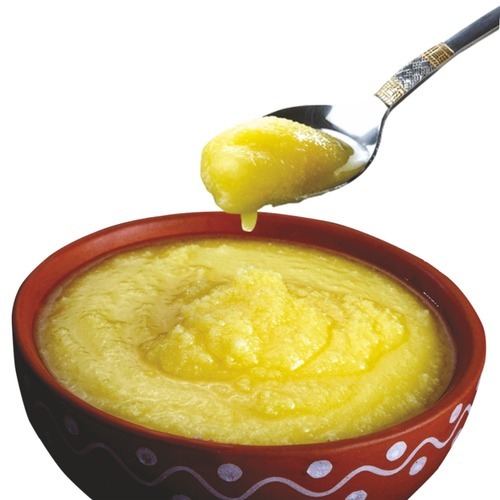
Do you love ghee? Do you put it in your dal or chapati or rice? If yes, then, it’s great! Let us know some interesting information about ghee!
The liquid gold found in every Indian kitchen is Ghee(Sanskrit: Ghrita), is clarified butter made with cow’s milk originated in ancient India. It has liquid granular texture with yellow color which is due to cow’s milk fat which contains a pigment called the Beta-carotene, a precursor of vitamin-A.
Nutritional value of ghee
Ghee is more concentrated in fat than butter, as water and milk solids have been removed from it. It is complex lipid(fat) of glycerides (majorly triglycerides), free fatty acids, phospholipids, sterols, sterol esters, fat soluble vitamins, carbonyls, hydrocarbons, carotenoids, (only in ghee derived from cow milk).
Ghee is composed almost entirely of fat 99.5%, 62% of which consists of saturated fats ( non-inflammatory fats). It is also rich in oxidized cholesterol. Other micronutrients present are vitamin A (3069IU- 61%of daily value), vitamin E (2.8 mg- 14% of DV) and vitamin K ( 8.6 mg11% of DV) per 100 gm of ghee. It also serves as concentrated source of energy.
Health benefits of ghee
1. Ghee for gut health
Ghee is rich in Docosahexaenoic Acid (DHA) which increases digestive fire (agni) and improves absorption and assimilation of nutrients. It also improve gut motility so helps in relieving constipation.
Ghee also has a higher concentration of phospholipids and butyrate acid – this is a short chain fatty acid which heals the intestinal walls.
So Ghee is especially good managing conditions such as constipation, IBS, leaky gut, Crohn’s disease etc.
2. Ghee for brain health
Cultured Ghee is relatively higher in Omega-3 long-chain polyunsaturated fatty acids, which is a major component of retinal and brain tissues and remains important in prevention of various diseases. It nourishes dhatus, improves memory.
3. Ghee as immune booster
Ghee is loaded with antioxidants, which boosts the immune system by increasing the body’s ability to absorb essential nutrients. Studies say that consumption of ghee has anti-inflammatory properties, which can help in treating various types of chronic diseases like arthritis. Ghee can increase the good cholesterol levels ( HDL) inside the body, which is great for your heart health.
How to store ghee
It becomes very important to store ghee properly to improve shelf life and retain its nutrients content.
It should always be stored in glass jars with air tight containers. Direct sunlight can cause moisture to build inside the jar which causes deterioration and oxidation of essential fatty acids which reduces its shelf life. Thus it is important to protect ghee from UV rays from the sunlight and fluorescent lights.
Now that you know the nutritional values and health benefits of ghee, you would surely want to add it to your diet! So, do it and don’t forget to share this article with your friends and family members. Eat good and stay healthy!
Authors bio
Hey, I am an enthusiastic functional nutrition expert with 14 yrs of experience in the field of nutrition.
I am highly qualified nutritionist with masters degree and Registered Dietician.
I believe in magical healing power of food and nutrition and want to guide people for the same.
Follow me for more interesting health facts and nutritional information.
 Aspire Health with Swatee